

Ventilation for Offshore contaminated bulk liquids
Transport of Backloaded Contaminated Bulk Liquids - treated
The transport of backloaded contaminated bulk liquids has traditionally been regulated by local authorities in each state. Recent revisions to the International Bulk Chemical (IBC) Code now provide clearer international guidance, introducing two product entries: Offshore Contaminated Bulk Liquid P (o) and Offshore Contaminated Bulk Liquid S (o). Both are classified as IMO Ship Type 2 products and fall outside the scope of Resolution A.673.
A tripartite agreement - later expanded to six parties - led to the inclusion of a third entry: Offshore Contaminated Bulk Liquids Treated, as defined in MEPC.2 Circ.30 Rev.1 (25 April 2025). This designation applies to cargoes that have undergone treatment to suppress or eliminate hydrogen sulphide (H₂S) emissions, a toxic and potentially flammable gas commonly associated with contaminated bulk liquids.
Safety Concerns and Ventilation Requirements
The safe transport of contaminated liquid mud from offshore installations to shore has gained heightened attention following reports of H₂S emissions both on deck and within cargo rail systems. These incidents highlight the need for robust containment protocols and enhanced safety measures.
Ventiq has introduced an advanced solution to address these challenges. The system integrates two critical components: an end-of-line high-velocity PV valve and an overfilling ventilation device positioned between the tank and the vent termination point. Together, they safeguard the tank against excessive overpressure during accidental overflow while ensuring controlled release of vapours.
A key feature is that flow control in many cases is located outside the vessel, preventing semi-solid or contaminated liquids from entering the vent system. This external positioning is vital for maintaining the reliability of an automatic venting system. By keeping the vent system clear, the solution ensures uninterrupted functionality and reduces the risk of hazardous emissions.
Through these measures, Ventiq’s solution enhances containment integrity, directs vapours safely away from the vessel, and aligns with evolving international safety standards for bulk liquid transport.
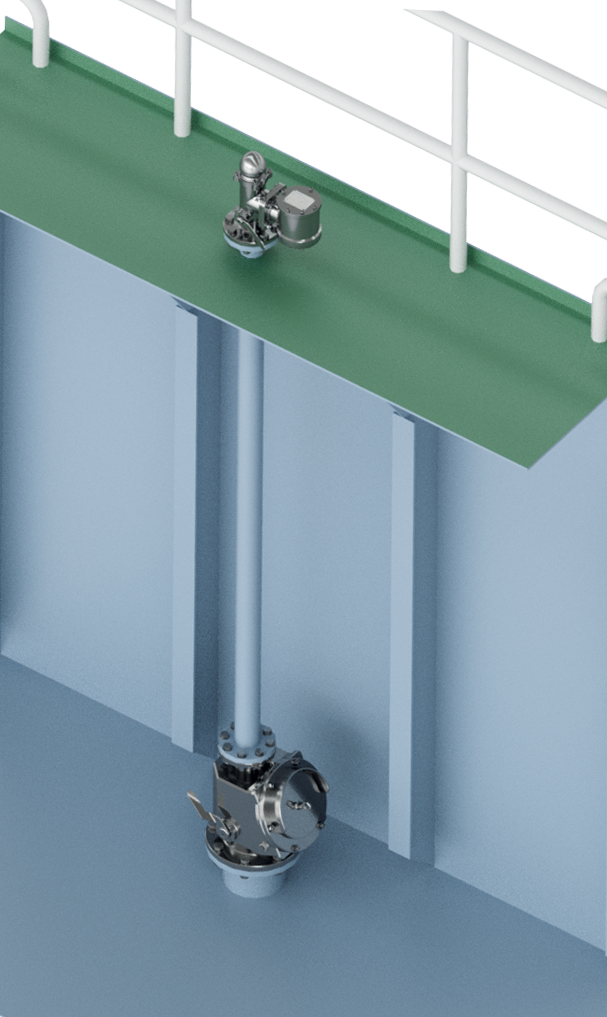
More information regarding the OSVCC solution can be found here